
Imagine that it is your first day on a new job, but you don’t know who your boss will be, what you are going to be doing (or if you are capable of doing it), who your co-workers are, where the bathroom is, or if you will have lunch. That would be immensely stressful for an adult. Now, imagine that you are a five-year-old.
 Many children experience a similar anxiety on the first day of kindergarten, arriving at school without knowing anything about what is going to happen to them. As a result, the first day of school does not always go well. In fact, teachers report that 48% of children beginning kindergarten struggle with the transition to school.
It doesn’t have to be that way. There are many ways to create a quality transition to school for every child. Studies have shown that a quality transition to school is a predictor of both parent involvement and the child’s academic achievement.
What is a Quality Transition
Whether or not children have gone to preschool or feel ready for school, age is the determining factor for enrolling in kindergarten. The quality transition process is designed to help both parents and children at any stage of readiness adjust to a new and more challenging environment in order to prepare them for school success.
Components of a Quality Transition
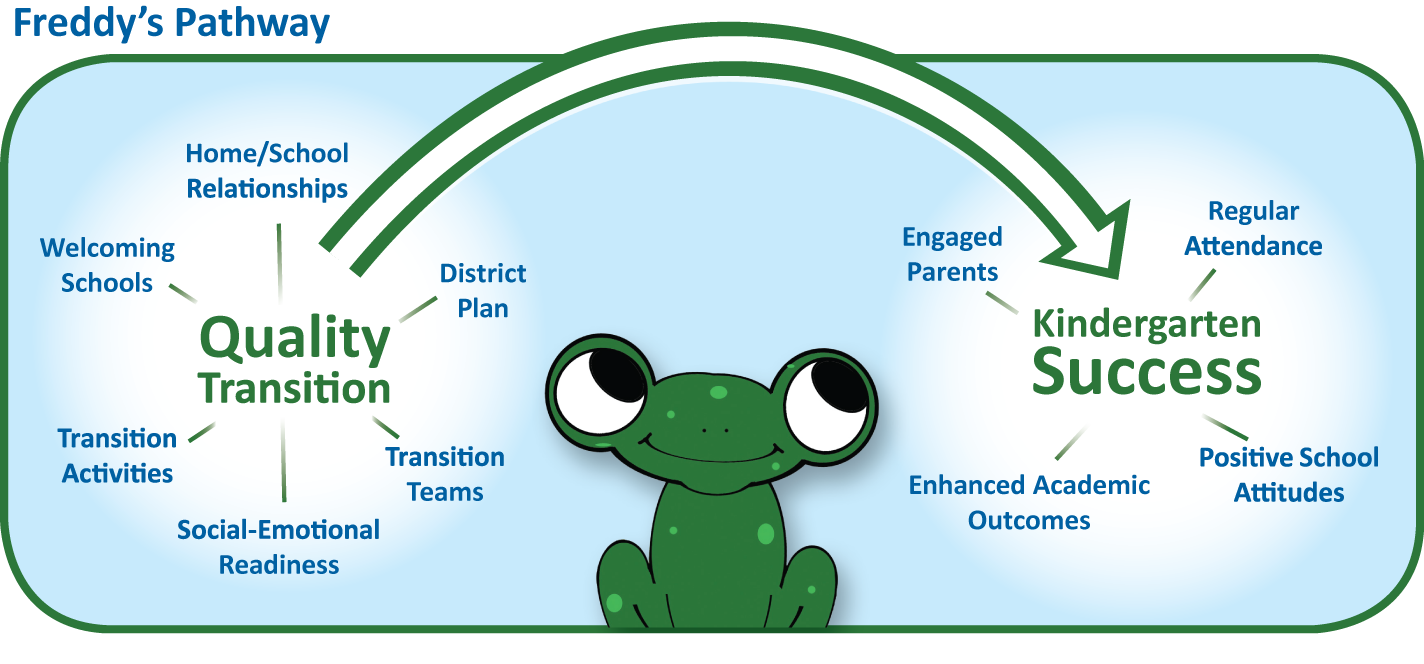
- An early start. The transition to school starts many months before the first day with activities that help prepare the child, the parents, and the teacher for the coming school year. A quality transition takes time, starting several months before the child enters kindergarten and ending a few months after kindergarten starts.
- Strong relationships between the parent and the child, the teacher and the child, the parent and the teacher, and between the family, other school personnel, and the people in the surrounding community. All of the relationships surrounding the child are closely connected with one another, and the ways in which they develop over time affect the child’s educational outcomes.
- Increased comfort levels on the first day of school. Children and parents know the teacher, what the school is like, and what the child will be learning before arriving at school. Transition activities that allow the child to meet the teacher before the first day of school help to build comfort and can increase both attendance and academic outcomes.
- Tailored transition plans. The school has a good transition plan that is tailored to its community. This plan addresses the specific needs of both the new kindergarteners starting school and their parents.
These four components will ensure a quality transition for every child and a great first step to school success.
Why Quality Transition Works
The Ready Freddy model for quality transition is based on an ecological model of transition and coupled with research on parent engagement, attendance, and social emotional readiness. The core purpose of quality transition is to develop a positive pattern of relationships and behaviors that research demonstrates lead to future school success.
Developing a Quality Transition
Hold a Transition Event
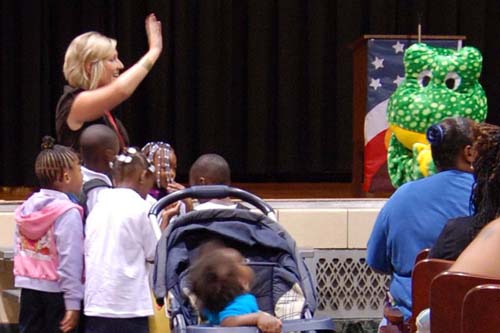
Ready Freddy transition events have included opportunities to enroll in kindergarten, meet the kindergarten teacher, tour the school, and visit various resource tables set up by members of the community. To increase attendance, Ready Freddy events have welcomed the entire family and have had games and activities to keep the children and their siblings engaged while parents learned about the school, its practices, and its staff.
An example of one annual event is the Ready Freddy celebration on the first day of school. Community volunteers come out to welcome the kids and parents as they arrive at school on the first day. The principal gives a special welcome address to the kindergarten parents, which includes inviting parents to be an active part of their child’s education and giving specific examples of how they are welcome to come into the school (such as to visit the classroom, join the child for meals, or plan a birthday party).
Encourage Parent-Child Interaction During Transition
Both the child and parent go through a transition when the child starts kindergarten. Doing activities to get ready for school together can make the time more fun. See our Parents section for examples of activities that will help the parent and the child get ready for school.
Make Initial Contact Count
Make sure that the first contact between the parent and teacher is a positive one that does not focus on problems, bad behavior, or any other negative topic. To learn more about ideas for developing this positive relationship, visit the Parent Engagement page.
A Note to Schools: Common Barriers to Implementing a Quality Transition
- Late class lists. Early Enrollment is very important so that the school can generate a class list and include children and families in transition activities.
- Lack of a transition plan. The most common school transition practices happen after school starts. A parent orientation before school starts is very helpful and will increase the parent’s comfort level and relationship with the school.
- No staffing over the summer. Summer can be an ideal time to work with families on the transition to kindergarten. If teachers are unavailable in the months leading up to school, families can miss out on opportunities to develop that important relationship. Sometimes teachers’ unions limit summer work and/or there are not enough resources to pay teachers for extra time. Schools should consider stipends or “exchange days” to allow teachers to perform home visits or attend events where families will be present. School administrators could also think of ways to include teacher time for transition activities in future budgets.
Links for Transition
- Office of Child Development and Early Learning: Early Childhood-related SAS Resources and Information
- PA Keys Transition Toolkit
- Recognition and Response: Promoting Smooth Transitions to Kindergarten (Includes resources for children with special needs)
- Terrific Transitions: Annotated Bibliography
- Ecological Model of Transition
- Transition from Preschool Services to Kindergarten
- The Transition to Kindergarten: A Review of Current Research and Promising Practices to Involve Families
- Terrific Transitions: Ensuring Continuity of Services for Children and Their Families